|
||||||||||||||||||||||||||||||||||||||||||||||||||||||||||||||||||||||||||||||||||||||||||||||||||||||||||||||||||||||||||||||||||||||||||||||||||||||||||||||||||||||||||||||||||||||||||||||||||||||||||||||||||||||||||||||||||||||||||||||||||||||||||||||||||||||||||||||||||||||||||||||||||||||||||||||||||||








|
Interpreting Linear Type Trait STAs Linear type trait genetic evaluations are first calculated as Predicted Transmitting Abilities (PTAs) similar to the production traits and final score. PTAs for different traits (such as PTA Milk and PTA Protein) expressed in the same units (pounds) can be very difficult to display on the same graph because the values for the traits are so different (+2000 lbs. vs. +50 lbs.). Trying to include other traits (PTA Type for example) expressed in different units (points) on the same graph is nearly impossible. A practical solution for displaying several traits on the same graph is to standardize each of the traits. Additionally, Standardized Transmitting Abilities (STAs) allow you to easily compare different traits of the same bull and see which traits have the most extreme values.
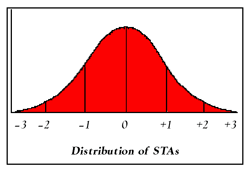
The range of STA values is the same for all traits. Sixty-eight percent (68%) of the STA values are between -1.0 and +1.0 for any trait. Ninety-five percent (95%) of STAs have values between -2.0 and +2.0 and 99% of all STAs are between -3.0 and +3.0. The figure labeled "Distribution of STAs" is also called a bell-shaped curve. Many traits have this distribution. At the average (STA = 0) you will find the greatest number of bulls. As the STA value moves farther from the average, progressively fewer bulls will be at each STA. More bulls have low STAs (-1 to +1) than large STAs. A zero (0.0) STA value represents breed average for that trait (Breed average is defined as a five year old cow, born in 2015, and milking in the fifth month of her third lactation). Knowing the STA of a bull (or cow) tells you how extreme his future progeny should be. STAs do not allow you to easily know how much different a bull's average daughter is from breed average. To answer the question, "How much more slope from hips to pins does the average daughter of a bull with a +3.0 STA have than a bull with a -3.0 STA?", we need additional information. The average progeny scores that correspond to STAs for each trait are presented in Table 4. For example, the average mature daughter of bulls with a -3.0 STA for Rump Angle will be scored 18.5 points. In contrast, the average mature daughter of bulls with a +3.0 STA for Rump Angle will be scored 27.8, a difference of 9.3 points.
Stature has the highest heritability (.42) of all evaluated type traits, and consequently the greatest range in average daughter scores. In comparison, Foot Angle has a much lower heritability (.15) and a much smaller range (4.5 points) in average daughter score between bulls with extreme STAs (+3.0 vs. -3.0). Breeders can increase (or decrease) their future herds' average score for Stature much faster than their herds' average score for Foot Angle, if the mating sires have identical STAs for both traits. Breeders want to know how much more slope from hooks to pins a cow that is scored 28 in Rump Angle has than a cow that is scored 19 points. Table 5 provides this answer (1.4 inches) as well as additional data. Upon first studying Table 5, you may think that the average daughters of the most extreme bulls are quite similar. For example, two inches of stature (average difference between daughters of bulls with a +3 STA for Stature and -3 for Stature) may appear to be a small difference, but remember these differences accumulate over generations. Each generation interval is approximately 6 years, so over 30 years you can increase (or decrease) your herd's average stature by 5 inches compared to the breed average. Relatively small changes in each generation can result in dramatic changes over time. If your goal is to produce tall cows, you could start with average cows for stature (0 STA) and breed them to a bull that transmits extreme stature (+4.0 STA). The resulting progeny would have an average stature score of approximately 40.3 points and be nearly 59 inches tall. If you started with only very tall cows (Stature STA = +3.0), the resulting progeny would be even taller. Their expected Stature score would average 45.3 points, and they would average about 59.1 inches tall. Using only bulls and cows with extreme STAs can result in much faster changes in your herd. Some traits (such as Foot Angle) are considered to be best at one extreme (steep). Other traits (such as Udder Depth) have an intermediate optimum. Extremely shallow udders usually do not have adequate capacity to allow high production. However extremely deep udders are detrimental to the health and longevity of cows. Most dairy producers prefer the udder of a mature cow to stay above the hocks.
Bulls with Udder Depth STAs near zero will sire mature daughters that score approximately 20 points for Udder Depth on average. This average daughter's udder will be 1.1 inches above the hock when she is mature. Of course, some daughters will have shallower udders, and some deeper. Approximately 8% of these mature daughters will have udders below their hocks. In comparison, bulls with +3.0 Udder Depth STAs should have only 1% of their mature daughters with udders below their hocks. By contrast, bulls with -3.0 Udder Depth STAs are expected to have 31% of their mature daughters with udders below their hocks. It is suggested that breeders focus on the most economically important traits and accumulate small improvements across generations. A bull should not be automatically eliminated just because he has a negative STA. For example, a bull with a -0.50 STA for Udder Depth can "safely" be mated to 70% of the cow population and 92% of his mature daughters should have udders above their hocks. Each cow has "strengths" and "weaknesses" and should be mated to bulls that complement her individuality. Identify the most important traits to your herd, and select bulls that improve one or more of these traits. Use a complementary mating system (such as Holstein Association USA's MultiMate software) to mate each cow or heifer. Consistently keep improving the most important traits and watch the results accumulate over several generations.
|
|||||||||||||||||||||||||||||||||||||||||||||||||||||||||||||||||||||||||||||||||||||||||||||||||||||||||||||||||||||||||||||||||||||||||||||||||||||||||||||||||||||||||||||||||||||||||||||||||||||||||||||||||||||||||||||||||||||||||||||||||||||||||||||||||||||||||||||||||||||||||||||||||||||||||||||||||||
|
||||||||||||||||||||||||||||||||||||||||||||||||||||||||||||||||||||||||||||||||||||||||||||||||||||||||||||||||||||||||||||||||||||||||||||||||||||||||||||||||||||||||||||||||||||||||||||||||||||||||||||||||||||||||||||||||||||||||||||||||||||||||||||||||||||||||||||||||||||||||||||||||||||||||||||||||||||